Recipes · 13 September 2026
What to Eat in Murcia: Local Dishes, Tapas Bars and Where to Try Them
The huerta is more than a landscape in Murcia. It is the backbone of the city's identity: a network of orchards, irrigation channels and market gardens that still shapes how Murcia eats. The market garden is described by
The huerta is more than a landscape in Murcia. It is the backbone of the city’s identity: a network of orchards, irrigation channels and market gardens that still shapes how Murcia eats. The market garden is described by the city’s tourism board as something without which Murcia “cannot be understood”, and its influence shows in the abundance of artichokes, tomatoes, peppers, courgettes, citrus and leafy greens that appear across local menus.
This is cooking that favours clarity over complexity. Olive oil, salt and careful timing do most of the work. Dishes arrive without unnecessary flourish, but with a depth of flavour that comes from the quality of what goes into them.
That restraint is part of Murcia’s appeal. The food does not shout for attention. It lets vegetables taste like vegetables, seafood taste like the coast, and rice absorb the flavour of the stock it is cooked in. In a region known as “Europe’s Orchard”, overworking ingredients this good would almost feel beside the point.
Eating here follows its own rhythm too. Lunch is the main event, stretching comfortably into the afternoon, while dinner begins later and unfolds more gradually. It is worth adjusting to that pace. Murcia rewards those who slow down.
What to Eat in Murcia
Murcia’s traditional dishes tell the story of the region clearly: the market gardens of the huerta, the rice and fish of the coast, older Mediterranean and Moorish influences that linger in sweets and spices, and the everyday tapas culture that gives the city much of its character.
Some dishes are best eaten standing at a bar with a cold beer. Others belong to a longer lunch, ordered slowly and shared across the table. The pleasure is in the variety: crisp, salty bites; soft vegetable dishes; rich rice; flaky pastry; and desserts scented with citrus and cinnamon.
The following dishes are the ones to look for first.
Rice and Seafood
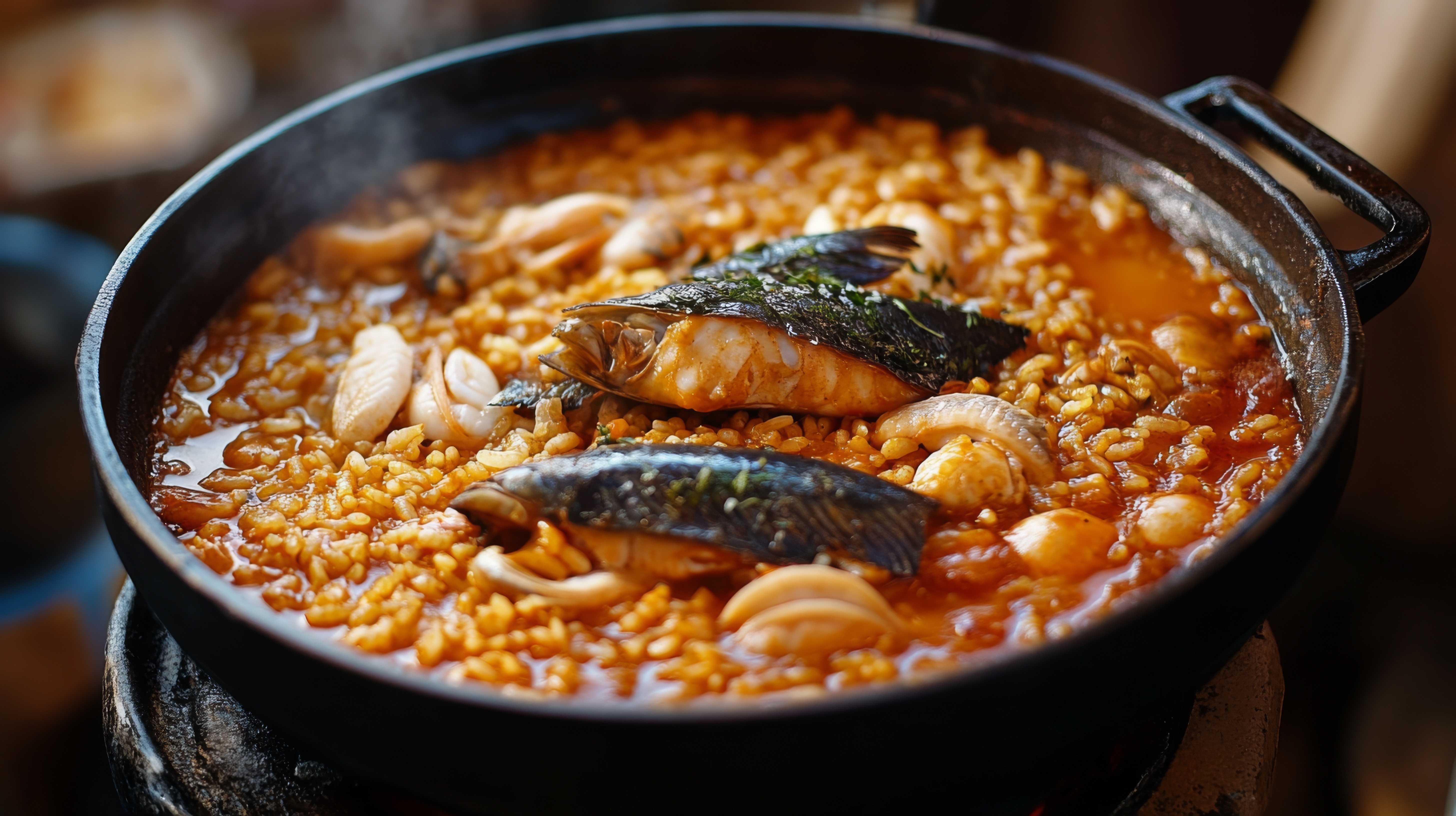
Few dishes capture the wider Murcia region better than arroz al caldero. Closely associated with the Mar Menor and the coast, this is not a delicate rice dish so much as a deeply savoury one, built around fish stock, garlic and ñoras, the small dried peppers that give the dish its warmth, colour and depth.
The rice absorbs the flavour of the stock before being served with fish and often a spoonful of alioli. It is the kind of dish that makes most sense near the coast, where the ingredients feel closest to their source and lunch can stretch lazily into the afternoon.
Seafood more broadly plays a quiet but important role in Murcia’s kitchens. Grilled fish, octopus, shellfish and salted fish tend to be prepared with restraint, allowing freshness to carry the dish rather than heavy sauces or unnecessary decoration. It is a style of cooking that suits the region well: direct, generous and confident enough not to overcomplicate things.
If you are staying in Murcia city, rice dishes and seafood are still easy to find, though some of the region’s most memorable coastal eating sits beyond the city itself. Cartagena, the Mar Menor and the surrounding coastline all add another layer to Murcia’s food story.
Small Plates and Tapas
Tapas in Murcia are less about reinvention and more about familiarity done well. The city’s best small plates tend to be crisp, salty, creamy, sharp or gently rich, often in the space of just a few bites.
The marinera is the tapa to look for first. A crisp breadstick-style base is topped with ensaladilla rusa and finished with a single anchovy, bringing together crunch, creaminess and salt in a way that feels simple until you realise how easily one becomes two. If the same base is served without the anchovy, it is often known as a bicicleta; with boquerón instead, you may see it called a marinero.
Ensalada murciana, also known as moje murciano, is another staple. Made with tomato, tuna, boiled egg, olives and onion, it has the kind of pantry-led clarity that suits warm days and long lunches. It is not showy, but it is exactly the sort of dish that explains Murcia’s food culture better than anything fussy could.
Ordering tapas here is often gradual rather than fixed. A plate or two arrives, followed by another, then perhaps something suggested by the kitchen or spotted on a neighbouring table. The meal builds naturally, shaped as much by conversation as appetite.
A cold Estrella de Levante, Murcia’s local beer, is the classic easy companion to this kind of eating. There are local wines worth looking out for too, particularly from Jumilla, Bullas and Yecla, but for a simple tapas stop, beer and a few well-chosen plates will rarely feel wrong.
Vegetable-Led Dishes
The strength of Murcia’s produce comes through most clearly in its vegetable dishes. This is where the huerta becomes tangible, not as an abstract landscape but as something you can taste.
Zarangollo is one of the region’s most quietly expressive dishes. Usually made with courgette, onion and egg, it is soft, savoury and deeply tied to home-style cooking. Like many of Murcia’s best dishes, it does not rely on elaborate technique. Its appeal comes from good ingredients cooked patiently enough to let them become themselves.
Artichokes are also worth seeking out, especially when they appear simply grilled, braised or lightly fried. Homely preparations such as alcachofas de la abuela, the sort of grandmotherly, traditional dish that suits Murcia’s vegetable-led cooking especially well, are another regional reference point. Peppers, tomatoes, aubergines and leafy greens also appear frequently, often dressed with little more than olive oil and salt.
These dishes are easy to underestimate if you arrive looking only for seafood, rice or tapas. But Murcia’s vegetable cooking is one of the clearest expressions of the region. What you see in the market in the morning often finds its way onto the plate by lunch.